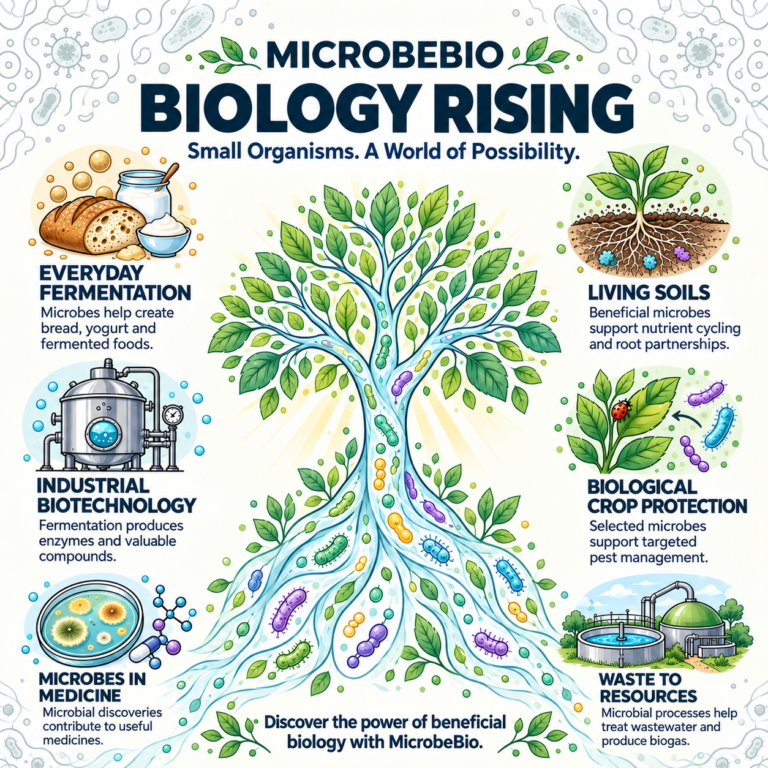
MicrobeBio® — Biology Rising™
Advanced Biological Technology for Productive, Resilient and Regenerative Agriculture
The Future of Agriculture Is Alive
Agriculture is entering one of the most consequential periods in its history.
The world needs to produce more food and agricultural value while farmers simultaneously face rising fertilizer costs, increasing water constraints, soil degradation, pest and disease pressure, supply-chain uncertainty, extreme weather, and growing expectations to reduce agriculture’s environmental footprint.
For decades, the dominant response to increasing production was straightforward: apply more fertilizer, more water, more crop-protection products, and more energy.
The agriculture of the future requires a different equation.
It must produce more value from every hectare, every kilogram of fertilizer, every liter of water, and every biological resource available to the farm.
That is where MicrobeBio® comes in.
MicrobeBio is developing advanced biological technologies designed to work with nature’s existing systems—beneficial microorganisms, plant roots, soil biology, organic matter, nutrient cycles, and biological processes—to help agriculture become more productive, efficient, resilient, and regenerative.
Our philosophy is simple:
Do not simply add more inputs. Make the entire agricultural system work better.
From Input Agriculture to Biological Agriculture
Soil is not simply dirt.
It is a living ecosystem.
Within the rhizosphere—the narrow zone surrounding plant roots—billions of microorganisms can interact with roots, minerals, organic compounds, water, oxygen, and one another.
These biological relationships influence some of the most fundamental processes in agriculture:
Nutrient cycling
Root development
Organic-matter decomposition
Soil aggregation
Nitrogen transformations
Phosphorus availability
Micronutrient mobility
Water dynamics
Plant signaling
Biological competition
Carbon cycling
MicrobeBio is developing technologies around these natural processes.
Instead of treating biology, fertility, soil health, water management, and crop protection as completely separate challenges, we look at them as parts of one interconnected soil–microbe–root–plant system.
That systems approach is at the heart of MicrobeBio.
The MicrobeBio® Value Proposition
MicrobeBio technologies are designed around six fundamental agricultural objectives:
Build healthier soil.
Develop stronger and deeper roots.
Improve nutrient-use efficiency.
Increase water-use efficiency.
Support crop productivity and resilience.
Reduce unnecessary dependence on high-input agriculture.
When these improvements work together, the farmer has the opportunity to create more agricultural value from the same land and resources.
1. Stronger Roots: Where Productivity Begins
A crop can only use the resources it can reach.
A small or poorly functioning root system restricts the volume of soil available to the plant. Nutrients may be present beyond the active root zone. Moisture may remain inaccessible. Fertilizer may be applied without being fully captured by the crop.
MicrobeBio programs are designed to support the biological conditions associated with healthy root development.
Potential benefits include:
Greater root mass
Increased root density
More lateral root development
Deeper soil exploration
Greater effective root-zone volume
Improved nutrient interception
Improved access to soil moisture
Better establishment
Stronger rhizosphere activity
Greater overall plant vigor
The significance is enormous.
A larger functional root system effectively increases the volume of soil available to each plant.
Instead of asking only:
“How much fertilizer did we apply?”
MicrobeBio encourages farmers to ask:
“How much soil can the crop effectively explore?”
That difference can fundamentally change agricultural efficiency.
2. Make Every Unit of Fertilizer Count
Fertilizer represents one of the largest production costs for many farmers.
Yet fertilizer application does not automatically equal plant nutrition.
Nutrients can become unavailable or be lost through processes such as fixation, precipitation, volatilization, leaching, runoff, immobilization, or unfavorable soil chemistry.
Poor root development can further reduce nutrient capture.
MicrobeBio technologies are designed to improve the biological environment around the root system and support more efficient nutrient cycling and acquisition.
The objective is not simply:
More fertilizer.
It is:
More crop value from the fertilizer already being used.
This can become increasingly important as fertilizer prices, transportation costs, and global supply risks affect farm economics.
3. Biological Nitrogen Cycling
Nitrogen is fundamental to crop productivity, but nitrogen management is also one of agriculture’s greatest efficiency challenges.
Selected beneficial microorganisms can participate in biological nitrogen cycling, including processes through which atmospheric nitrogen is converted into biologically useful compounds.
Other microorganisms participate in the transformation and cycling of nitrogen already present within the soil and organic matter.
MicrobeBio uses biological technologies to complement responsible nutrient-management programs.
The long-term objective is to create cropping systems in which biological processes contribute more meaningfully to nutrient efficiency.
4. Unlocking Phosphorus
Agricultural soils can contain significant quantities of phosphorus that are not readily available to plants.
Certain beneficial microorganisms produce organic acids, enzymes, chelating compounds, and other metabolites that can influence phosphorus solubilization and mineral interactions.
Supporting these biological processes may help improve access to portions of the soil phosphorus pool under appropriate conditions.
This creates an important distinction:
The future of plant nutrition is not only about putting nutrients into the soil.
It is also about mobilizing nutrients already present within the production system.
5. Nutrient Mobilization and Mineralization
Soils contain enormous nutrient reserves in minerals, organic matter, crop residues, microbial biomass, and previously applied fertilizers.
However, nutrients must become biologically available before plants can use them effectively.
Beneficial microorganisms participate in mineralization and other nutrient-transforming processes.
Through microbial metabolism and decomposition, organic materials can be converted into compounds that participate in nutrient cycling.
MicrobeBio’s approach therefore focuses on both sides of the nutrient equation:
What goes into the field—and how efficiently the biological system processes what is already there.
6. Stimulating the Living Soil
Healthy agricultural soil contains an extraordinary biological community.
Bacteria, fungi, protozoa, and other organisms participate in complex food webs and biochemical cycles.
MicrobeBio technologies are designed to support beneficial biological activity and create a more functional rhizosphere.
Depending on formulation and agronomic conditions, biological activity can contribute to:
Nutrient cycling
Root colonization
Organic-matter decomposition
Soil aggregation
Nutrient mobilization
Biological competition
Plant–microbe signaling
Rhizosphere development
Soil carbon cycling
MicrobeBio therefore views microorganisms not simply as ingredients.
They are part of agriculture’s biological infrastructure.
7. Better Soil Structure
Productive soil must provide roots with nutrients, water, oxygen, and physical space.
Biological activity, organic compounds, fungal networks, roots, and microbial metabolites can all influence soil aggregation.
Improved aggregation can support:
Better pore structure
Improved infiltration
Greater aeration
Improved root penetration
Better moisture distribution
Reduced surface sealing
More favorable microbial habitat
The objective is to transform soil from a compact growing medium into a more functional biological environment.
8. Improve Water-Use Efficiency
Water scarcity is rapidly becoming one of agriculture’s defining challenges.
MicrobeBio approaches water efficiency by strengthening the system responsible for capturing water: soil and roots.
A deeper and more extensive root system can explore a greater volume of soil for available moisture.
Improved soil structure and organic-matter management can also support infiltration and water retention.
Together, these processes can potentially improve the efficiency with which available water supports crop production.
This is especially valuable where farmers face:
Drought
Expensive irrigation
Restricted water supplies
High temperatures
Irregular rainfall
Low organic matter
Degraded soil structure
The objective is not merely to irrigate more.
It is to produce more value from the water already available.
9. Greater Crop Resilience
Plants operate in changing environments.
Heat, drought, salinity, nutrient limitations, transplant stress, excessive moisture, compaction, pests, and disease can all reduce productivity.
Healthy roots and functional soils give plants a stronger foundation.
MicrobeBio programs are designed to support:
Early establishment
Root development
Nutrient acquisition
Water acquisition
Vegetative vigor
Rhizosphere health
Crop uniformity
Recovery from environmental stress
Reproductive development
Resilience does not mean crops become immune to stress.
It means building a production system better equipped to function when conditions are less than ideal.
10. Biological Crop Protection
Crop productivity can be significantly reduced by plant pathogens, nematodes, insects, and other pests.
MicrobeBio’s technology platform includes beneficial microorganisms that can be incorporated into integrated biological crop-management strategies.
Depending on the microorganism and formulation, biological mechanisms can include:
Competition for nutrients
Competition for colonization sites
Production of microbial metabolites
Antagonism toward certain pathogens
Enzymatic activity
Root-zone colonization
Mycoparasitic interactions
Entomopathogenic activity
Interactions with plant defense pathways
The opportunity is to develop crop-management systems that combine multiple biological mechanisms rather than depending entirely on a single mode of action.
11. Higher Yield Potential
Yield is the final expression of an entire biological system.
No single input determines yield.
It results from interactions among genetics, nutrition, soil, roots, water, weather, pest pressure, disease pressure, and management.
MicrobeBio works on several of these foundations simultaneously.
The biological pathway can be summarized as:
Healthier soil
↓
Greater microbial activity
↓
Stronger rhizosphere
↓
Larger functional root system
↓
Improved nutrient and water acquisition
↓
Greater crop vigor
↓
Improved productive potential
Actual results will vary according to crop, soil, climate, management, formulation, and application program, but the objective remains consistent:
Build the biological foundation required for higher productivity.
12. Better Crop Quality
Yield alone does not determine farmer profitability.
Marketable yield matters.
Depending on the crop, buyers may pay premiums or impose discounts based on:
Size
Weight
Uniformity
Appearance
Maturity
Grain filling
Fruit development
Packout
Storage characteristics
Overall harvest quality
By supporting roots, nutrition, water management, and plant development, MicrobeBio programs aim to create favorable conditions for both yield and quality.
The goal is not simply more crop.
It is:
More marketable value per hectare.
13. Supporting Soil Organic Matter
Organic matter is one of the foundations of productive soil.
It contributes to:
Nutrient storage
Water retention
Aggregation
Cation exchange
Microbial habitat
Root development
Soil resilience
MicrobeBio’s regenerative approach combines biological activity with improved management of organic resources.
Crop residues and other suitable organic materials are not merely waste.
They represent carbon, minerals, nutrients, and biological feedstock capable of contributing to future soil productivity.
14. Agriculture and the Carbon Cycle
Agriculture is one of the few major industries in which the primary production system naturally captures atmospheric carbon.
Plants absorb carbon dioxide through photosynthesis and convert it into biomass.
A portion of that carbon moves belowground through roots, exudates, residues, and interactions with microorganisms.
MicrobeBio technologies that promote productive root systems, soil biology, residue utilization, and organic-matter management can become part of broader soil-carbon strategies.
The agricultural opportunity is significant because soil carbon is not only an environmental consideration.
It contributes to soil functionality.
Soils with improved organic matter can often provide better:
Water management
Nutrient retention
Aggregation
Microbial habitat
Rooting conditions
Resilience
For farmers, carbon can therefore represent both an environmental opportunity and a soil productivity asset.
15. Turning Agricultural Waste Into Agricultural Value
Every harvest leaves something behind.
Crop residues.
Animal manures.
Processing residues.
Food-production by-products.
Organic waste streams.
Historically, many of these materials have been treated primarily as disposal challenges.
MicrobeBio sees another possibility.
Feedstock.
Through appropriate processing, stabilization, biological transformation, formulation, and quality control, suitable agricultural and organic residues can potentially become higher-value soil amendments and biological agricultural products.
This changes the equation from:
Waste → Disposal
to:
Waste → Biological Transformation → Agricultural Input → Crop Production → New Biological Resources
That is the foundation of a circular agricultural bioeconomy.
16. From Tons of Material to Precision Biological Inputs
Traditional compost can provide valuable organic matter, but many agricultural programs require large application volumes.
That creates practical challenges involving:
Transportation
Fuel
Storage
Loading
Field spreading
Labor
Equipment
International logistics
MicrobeBio is developing concentrated and biologically enhanced agricultural technologies intended to deliver greater functional value from smaller quantities of formulated material where appropriate.
The strategic objective is:
Higher biological value per kilogram transported and applied.
This can potentially reduce logistical burdens while making advanced biological soil technologies easier to scale across regions.
17. A Circular Bioeconomy for Agriculture
MicrobeBio sees agriculture not as a linear supply chain but as a biological cycle.
Traditional Linear Model
Raw materials → Inputs → Crop → Residues → Waste
MicrobeBio Circular Model
Agricultural resources
↓
Crop production
↓
Organic residues
↓
Biological processing
↓
High-value agricultural products
↓
Soil regeneration
↓
New crop production
This model has the potential to create economic value while reducing waste and returning useful biological resources to agriculture.
18. Reduce Reliance on Chemical Fertilizer Through Efficiency
MicrobeBio does not promote the simplistic idea that every farm can immediately eliminate conventional fertilizer.
Modern crops require adequate nutrition.
Instead, we pursue a more practical objective:
Use biology to improve efficiency so agriculture can progressively reduce unnecessary dependence on high levels of external inputs where agronomically appropriate.
This can involve:
Better nutrient cycling
Greater root exploration
Improved nutrient availability
Organic-matter mineralization
Biological nitrogen contributions
Phosphorus mobilization
Improved water efficiency
Precision nutrient management
The transition toward biological agriculture should be measured by performance—not ideology.
Farmers need solutions that work agronomically and economically.
19. Environmental Benefits
Improved agricultural efficiency can generate benefits beyond the farm.
Potential benefits of well-designed regenerative and biological programs include:
Reduced Nutrient Losses
Greater nutrient-use efficiency can help keep more nutrients within productive agricultural cycles.
Water Conservation
Improved soil and root systems can contribute to more efficient use of available water.
Reduced Waste
Agricultural residues can potentially be transformed into useful products rather than treated exclusively as disposal materials.
Improved Soil Function
Organic matter, aggregation, roots, and biology contribute to long-term soil productivity.
Reduced Dependence on Selected Conventional Inputs
Biological technologies can complement integrated strategies intended to optimize conventional fertilizer and crop-protection use.
Carbon Management
Healthy plant growth, root systems, residues, and soil organic matter participate in agricultural carbon cycles.
20. Protecting the Farmer’s Most Valuable Asset
Agricultural land is productive capital.
A farmer who improves soil structure, biological activity, organic matter, rooting depth, and water efficiency is not simply producing this year’s crop.
The farmer is investing in the productive capacity of future crops.
That is one of the fundamental differences between conventional input thinking and regenerative biological thinking.
MicrobeBio seeks to help agriculture move from:
Extract → Apply → Harvest → Repeat
toward:
Build → Grow → Regenerate → Improve.
21. Economics: Sustainability Must Be Profitable
Farmers cannot adopt technology simply because it sounds environmentally attractive.
It must create economic value.
MicrobeBio technologies are therefore developed around practical farm economics.
The potential value equation includes:
Greater Nutrient Efficiency
More value from fertilizer already being purchased.
Better Water Productivity
More crop value from available irrigation and rainfall.
Stronger Roots
Greater access to soil resources.
Higher Productive Potential
Improved biological foundations for yield.
Improved Marketable Quality
Potentially greater value from harvested production.
Reduced Transportation
Concentrated technologies can reduce logistical requirements compared with bulky amendments in appropriate applications.
Long-Term Soil Productivity
Protecting soil function protects productive capital.
The ultimate economic objective is straightforward:
Increase farmer profitability per hectare while improving resource efficiency.
22. One Biological Platform—Many Crops
The fundamental processes MicrobeBio addresses occur across agricultural systems.
Corn
Support root development, nutrient efficiency, water acquisition, plant vigor, and grain development.
Rice
Support rhizosphere biology, establishment, nutrient cycling, tillering, root development, and productive crop growth.
Wheat
Support rooting, nutrient acquisition, vegetative vigor, water efficiency, and grain development.
Soybean
Support rhizosphere function, root development, nutrient cycling, crop establishment, and productivity.
Cotton
Support establishment, root development, nutrient acquisition, vegetative growth, and reproductive development.
Banana
Support root-zone health, nutrient acquisition, vigorous plant development, bunch production, and long-term plantation productivity.
Coffee and Cacao
Support perennial root systems, soil biology, nutrient cycling, flowering, fruit development, and long-term soil productivity.
Vegetables
Support rapid establishment, rooting, nutrient efficiency, uniformity, crop quality, and marketable production.
Fruit Trees
Support rhizosphere biology, rooting, nutrition, flowering, fruit development, and long-term orchard health.
The technology can therefore be adapted to the biology of different crops rather than being limited to one agricultural sector.
23. Biological Technology Meets Precision Agriculture
The future of agriculture will not be purely biological.
Nor will it be purely digital.
The greatest opportunity comes when the two converge.
MicrobeBio envisions biological technologies integrated with:
Soil analysis
Tissue analysis
Precision fertilizer
Variable-rate application
Irrigation automation
Soil-moisture sensors
Weather monitoring
Satellite imagery
Drones
Remote sensing
Artificial intelligence
Farm-management platforms
Advanced genetics
Automated equipment
Precision agriculture tells farmers where and when intervention is needed.
Biological technology expands what agriculture can accomplish through that intervention.
Together, they can create a new generation of precision biological agriculture.
24. From Microorganism to Industrial Biotechnology
MicrobeBio’s vision extends beyond individual microbial products.
Developing reliable biological agriculture requires an entire technology platform.
That includes:
Discovery
Identifying microorganisms and biological compounds with useful characteristics.
Selection
Choosing organisms and biological technologies appropriate for specific agricultural functions.
Fermentation
Scaling selected microorganisms under controlled conditions to achieve reliable concentration, purity, viability, and performance.
Formulation
Combining biological components with appropriate carriers, nutrients, stabilizers, minerals, organic compounds, or complementary technologies to create practical agricultural products.
Quality Control
Establishing specifications for identity, viability, concentration, stability, physical characteristics, contamination control, and product consistency.
Application Technology
Developing practical delivery systems for seed treatment, soil application, irrigation systems, transplanting, foliar application, granular placement, and other agricultural uses.
Field Validation
Evaluating biological technologies under commercial growing conditions across different crops, soils, climates, and management systems.
Industrial Manufacturing
Creating scalable manufacturing systems capable of moving biological innovation from laboratory development to commercial agriculture.
This integrated capability is important because successful biological agriculture requires more than discovering an interesting microorganism.
It requires turning biology into a consistent, stable, scalable, farmer-ready technology.
25. Multi-Mechanism Biological Formulations
Nature rarely depends on only one organism or one biochemical pathway.
Healthy ecosystems function through biological diversity and interaction.
MicrobeBio applies this principle to agricultural biotechnology by exploring complementary combinations of beneficial microorganisms and biological compounds.
Depending on the intended application, a formulation may be designed around microorganisms associated with:
Biological nitrogen cycling
Phosphorus solubilization
Nutrient mobilization
Root-zone colonization
Organic-matter decomposition
Plant-growth promotion
Beneficial fungal activity
Biological competition
Soil aggregation
Rhizosphere development
Biological crop protection
The objective is functional synergy.
Instead of asking what one organism can do in isolation, MicrobeBio asks:
How can complementary biological functions work together to improve the entire crop-production system?
This systems perspective is central to our approach.
26. MicrobeBio® Biological Nutrition
Nutrition remains one of the largest opportunities for biological innovation.
Modern agriculture has become highly effective at supplying nitrogen, phosphorus, potassium, and other nutrients.
The next opportunity is to improve how efficiently those resources move through the soil–microbe–root–plant system.
MicrobeBio biological nutrition technologies are intended to complement conventional fertility through mechanisms associated with:
Nitrogen Management
Supporting biological processes involved in nitrogen cycling.
Phosphorus Availability
Supporting microorganisms capable of influencing phosphorus solubilization and mobilization.
Mineral Mobilization
Encouraging biological processes that can influence the availability of selected nutrients.
Organic Nutrient Cycling
Supporting decomposition and mineralization of suitable organic materials.
Rhizosphere Development
Creating a more biologically active interface between the soil and the root.
Root Expansion
Helping plants access a greater volume of soil.
The opportunity is compelling.
Instead of viewing fertilizer efficiency purely as a chemistry problem, MicrobeBio treats it as a biological and physical systems problem as well.
27. MicrobeBio® Soil & Root Technologies
The rhizosphere is one of the most economically important biological environments on the farm.
MicrobeBio soil and root technologies focus on strengthening this interface.
A productive rhizosphere can support:
Root establishment
Nutrient exchange
Microbial colonization
Root exudation
Mineral interactions
Water acquisition
Biological signaling
Soil aggregation
Organic-matter transformation
The principle is straightforward:
Improve the environment surrounding the root, and the plant has a stronger foundation for everything that follows.
For annual crops, this can support rapid establishment and early vigor.
For perennial crops, maintaining a healthy root zone becomes even more important because the same root system must continue functioning across multiple production cycles.
28. MicrobeBio® Biological Crop Protection
Agricultural sustainability requires both productivity and protection.
MicrobeBio’s biological crop-protection platform is being developed around naturally occurring organisms and biological mechanisms that can complement integrated pest-management programs.
Depending on the formulation and target, biological technologies may use beneficial bacteria, fungi, microbial metabolites, or combinations of biological mechanisms.
These technologies can potentially contribute to programs addressing:
Soil-borne plant pathogens
Selected foliar diseases
Certain nematodes
Selected insect pests
Root-zone biological imbalances
The emphasis is on integrated biological management rather than making unrealistic claims that one product can solve every crop-protection challenge.
The future of biological crop protection will increasingly depend on combining biology with monitoring, thresholds, crop rotation, genetics, cultural practices, and responsible conventional tools when necessary.
29. Water & Environmental Biotechnology
MicrobeBio’s biological vision extends beyond crop nutrition.
Water quality, irrigation efficiency, organic residues, wastewater, and environmental systems are directly connected to agricultural productivity.
Biological technologies can potentially contribute to:
Organic-matter transformation
Nutrient recovery
Wastewater treatment
Odor management
Biological decomposition
Water-quality improvement
Residue stabilization
Resource recovery
Circular nutrient systems
Agriculture consumes and processes enormous quantities of biological material and water.
The ability to biologically recover value from those streams represents a major opportunity for the next generation of agricultural infrastructure.
30. Fermentation: Scaling Nature
Microbial biotechnology becomes commercially meaningful only when beneficial organisms can be produced consistently and economically at scale.
Fermentation is therefore a cornerstone of the MicrobeBio platform.
Controlled fermentation can enable microorganisms to be cultivated under carefully managed conditions involving:
Temperature
Oxygen
pH
Nutrient availability
Agitation
Fermentation time
Biomass concentration
Contamination control
Once production is complete, microorganisms may undergo appropriate downstream processing, concentration, stabilization, drying, blending, formulation, and packaging.
Industrial fermentation transforms biology from a laboratory concept into scalable technology.
It is one of the bridges between microbiology and modern manufacturing.
31. Quality Is Critical in Biological Agriculture
Biological products are living or biologically derived technologies.
That makes manufacturing quality especially important.
Performance depends not only on which microorganism appears on a label but also on whether the organism is viable, stable, correctly identified, adequately concentrated, compatible with the formulation, and able to survive storage and application.
MicrobeBio emphasizes quality considerations such as:
Microbial identity
Viable concentration
Purity
Contamination control
Moisture
pH
Physical characteristics
Product stability
Shelf-life performance
Packaging integrity
Batch consistency
Biological agriculture will only achieve its full potential when farmers can expect the same professionalism and consistency from biological products that they expect from other advanced agricultural technologies.
32. Science Before Hype
The biological agriculture sector is growing rapidly.
That growth creates enormous opportunity—but it also creates a responsibility to distinguish credible biotechnology from exaggerated marketing.
MicrobeBio believes biological agriculture must be built on:
Mechanism.
Measurement.
Manufacturing quality.
Agronomic validation.
Responsible claims.
Continuous improvement.
Biology is powerful, but biological performance is influenced by crop, soil, climate, application timing, water quality, management, product storage, and numerous other variables.
For that reason, responsible biological agriculture requires disciplined science and agronomy.
MicrobeBio’s long-term objective is not simply to sell biological products.
It is to help establish biological technology as a dependable category of modern agriculture.
33. Field Performance Matters
A laboratory result is only the beginning.
Agricultural technologies ultimately have to perform in fields, orchards, plantations, greenhouses, and production systems under real-world conditions.
MicrobeBio therefore places significant importance on field evaluation across different:
Crops
Soil types
Climates
Irrigation systems
Fertility programs
Pest pressures
Production environments
Application methods
The purpose is to determine where a technology creates value, how it should be applied, and how it interacts with existing agricultural practices.
This creates a more practical development process:
Science → Formulation → Field Testing → Agronomic Optimization → Commercial Deployment
34. A Platform Designed for Global Agriculture
The biological challenges facing agriculture are global.
Farmers in different regions may grow different crops and operate under different climates, but many of the underlying challenges are similar:
Fertilizer affordability
Water efficiency
Soil degradation
Root health
Pest and disease pressure
Organic-waste management
Crop productivity
Agricultural profitability
MicrobeBio’s platform is designed to be adaptable across diverse agricultural regions.
Potential applications include production systems throughout:
North America
Latin America
The Caribbean
Africa
Asia
The Middle East
Other major agricultural regions
Local agronomy remains essential.
Products, rates, application timing, and management programs must be adapted to crops and regional conditions.
The technology platform is global.
The agronomic solution must remain local.
35. Food Security
The world’s food system faces a fundamental challenge:
Growing demand must increasingly be met without proportionally expanding agricultural land, water use, fertilizer consumption, and environmental impact.
That means agricultural productivity must become more efficient.
Biological technology can contribute to that transition by helping farmers improve the functionality of the resources already available to them.
MicrobeBio’s contribution to food security centers on:
Improving crop productivity
Supporting soil health
Increasing nutrient efficiency
Supporting water efficiency
Strengthening crop resilience
Protecting productive land
Recovering value from agricultural residues
Developing scalable biological inputs
Food security ultimately begins with productive farmers.
Technologies that help farmers maintain profitable production while preserving their productive resources can therefore contribute to a more resilient global food system.
36. Farmer Resilience
Agricultural resilience is not only environmental.
It is economic.
Farmers face volatile prices for fertilizer, fuel, transportation, labor, commodities, crop-protection products, equipment, and financing.
Every inefficient input increases production risk.
MicrobeBio’s strategy is therefore focused on helping farmers obtain greater value from resources they already use.
If a farmer can:
Capture more applied nutrition
Access more soil moisture
Develop stronger roots
Protect soil productivity
Improve marketable output
Reduce unnecessary inputs
Use local organic resources more effectively
the production system becomes economically stronger.
That is why farmer profitability is not separate from sustainability.
Farmer profitability is essential to sustainable agriculture.
37. Transforming Food Systems
MicrobeBio’s first sustainability pillar is Transforming Food Systems.
A sustainable food system must produce sufficient food while reducing waste and improving resource efficiency.
Biological technology can contribute by supporting:
Higher agricultural productivity
Efficient fertilizer utilization
Better water management
Biological crop protection
Agricultural residue recycling
Soil regeneration
Circular nutrient systems
More resilient supply chains
This transformation extends beyond individual farms.
It connects agricultural production, biological manufacturing, food processing, organic residues, waste recovery, and soil restoration.
The opportunity is to create food systems where resources circulate rather than disappear into waste streams.
38. Enabling Farmer Resilience
MicrobeBio’s second sustainability pillar is Enabling Farmer Resilience.
Farmers remain at the center of the agricultural system.
Biotechnology must therefore produce practical benefits on the farm.
Our technologies are intended to help farmers pursue:
Greater resource efficiency
Stronger crop establishment
More resilient production
Better nutrient utilization
Improved water management
Higher productive potential
Long-term soil productivity
Greater economic sustainability
The objective is not to make agricultural management more complicated.
It is to give farmers better biological tools with which to manage complexity.
39. Partnering With Nature
MicrobeBio’s third sustainability pillar is Partnering With Nature.
Modern agriculture does not have to choose between technology and nature.
Biotechnology allows us to understand natural processes more deeply and deploy them more precisely.
Microorganisms have been cycling nutrients, decomposing organic matter, interacting with roots, and building ecosystems for hundreds of millions of years.
Plants have evolved complex relationships with these organisms.
MicrobeBio seeks to work with these biological systems rather than ignoring them.
That is what partnering with nature means:
Understand biology. Harness biology. Scale biology.
40. Human and Animal Health Connections
Agricultural health, environmental health, animal health, and human health are interconnected.
Healthy soils support productive crops.
Responsible nutrient management can help protect water resources.
Better management of manure and organic residues can reduce environmental burdens.
Biological crop-management approaches can contribute to integrated strategies designed to optimize the use of conventional agricultural inputs.
More efficient production can help strengthen food security.
These connections reinforce the importance of viewing agriculture as part of a larger biological system.
MicrobeBio believes the future of agricultural biotechnology will increasingly reflect this integrated perspective.
41. Biodiversity Below Ground
When people think about biodiversity, they often picture forests, wildlife, birds, or pollinators.
Some of Earth’s most important biodiversity exists underground.
Soil contains extraordinarily diverse microbial communities that influence nutrient cycles, organic matter, plant health, soil structure, and ecosystem function.
Regenerative agriculture therefore cannot focus only on what is visible above the field.
The biological diversity beneath the crop matters as well.
MicrobeBio technologies are designed around the principle that a biologically functional soil can be an agricultural asset.
42. Reducing Agricultural Waste
Agricultural production inevitably generates residues.
The critical question is what happens next.
When suitable residues are burned, landfilled, poorly managed, or allowed to become environmental liabilities, potential biological value is lost.
MicrobeBio sees opportunities to recover:
Organic carbon
Nutrients
Minerals
Biological feedstock
Energy value
Soil-conditioning value
Through appropriately designed processing systems, waste can become a raw material for a new generation of agricultural products.
This creates environmental value and potentially creates entirely new revenue streams.
43. Decentralized Biological Manufacturing
One of the most promising possibilities for the future is regional biological manufacturing.
Instead of transporting low-value agricultural residues long distances, suitable materials can potentially be processed closer to where they are generated.
Regional biological facilities could integrate:
Organic feedstock handling
Stabilization
Drying
Biological processing
Fermentation
Formulation
Granulation
Packaging
Quality-control laboratories
Finished products can then return to regional agriculture or be distributed to higher-value markets.
This model has the potential to convert local waste challenges into local economic opportunities.
44. Higher Value per Ton
The future of agricultural waste management will increasingly depend on value creation, not simply disposal.
Traditional composting can be beneficial, but bulky materials often have relatively low economic value per ton and high transportation costs.
MicrobeBio’s biological manufacturing vision seeks to increase functionality per unit of material through:
Formulation
Nutrient balancing
Biological enhancement
Concentration
Stabilization
Quality control
Precision application
The goal is to transform agricultural residues from low-value bulk material into higher-value, performance-oriented agricultural inputs where technically and economically appropriate.
45. A New Agricultural Manufacturing Industry
This creates an opportunity larger than a single product category.
Biological agriculture can become a new manufacturing ecosystem combining:
Agriculture
Microbiology
Fermentation
Organic Waste Recovery
Plant Nutrition
Environmental Biotechnology
Precision Agriculture
Advanced Manufacturing
The result is a potential new industrial sector built around converting biological knowledge into agricultural productivity.
MicrobeBio intends to participate across this value chain.
46. From Laboratory Discovery to the Farm
A successful biotechnology platform must connect scientific discovery to practical agricultural outcomes.
MicrobeBio’s development model can be summarized as:
1. Identify the Agricultural Problem
Nutrient inefficiency, root limitations, soil degradation, pest pressure, water limitations, waste management, or another production challenge.
2. Identify Biological Mechanisms
Determine which microorganisms, metabolites, biological compounds, or complementary technologies may address the problem.
3. Develop the Formulation
Create a stable and practical product capable of being manufactured, stored, transported, mixed, and applied.
4. Validate Quality
Confirm biological and physical specifications.
5. Evaluate Agronomically
Test under relevant crop and environmental conditions.
6. Optimize the Program
Determine appropriate application timing, rate, compatibility, and integration with existing practices.
7. Manufacture at Scale
Move validated technologies into commercial production.
8. Measure Farmer Value
Evaluate yield, quality, resource efficiency, production cost, and return on investment.
This creates a disciplined pathway from biology to commercial agriculture.
47. Measuring What Matters
MicrobeBio believes the biological agriculture industry should increasingly measure performance using metrics that farmers understand.
Depending on the technology, meaningful measurements may include:
Root mass
Root depth
Root density
Plant biomass
Nutrient uptake
Tissue nutrient levels
Soil biological activity
Soil organic matter
Water-use efficiency
Crop uniformity
Yield
Marketable yield
Crop quality
Fertilizer-use efficiency
Input reduction
Cost per hectare
Revenue per hectare
Return on investment
Environmental indicators can also become increasingly important, including:
Nutrient-loss reduction
Water savings
Soil carbon
Waste diversion
Organic-matter recovery
Reduced transportation
Resource-use efficiency
The future of biological agriculture should be measurable agriculture.
48. The Farmer’s ROI Comes First
A biological technology can be scientifically interesting and environmentally attractive, but widespread adoption depends on economics.
Farmers need to understand:
What does it cost?
How is it applied?
What input can it improve or optimize?
What yield or quality benefit is realistic?
What operational savings may result?
What is the expected return per hectare?
MicrobeBio’s commercial philosophy is therefore centered on farmer ROI.
Environmental performance and economic performance should reinforce one another.
When a technology reduces waste, improves input efficiency, and increases marketable production simultaneously, sustainability becomes economically scalable.
49. More Than Yield
The value of biological technology should not be measured only at harvest.
A comprehensive value assessment can include:
Yield
How much marketable crop was produced?
Quality
Did the crop achieve better commercial characteristics?
Fertilizer Efficiency
Was nutrient use improved?
Water Efficiency
Was available moisture used more effectively?
Root Development
Was the crop’s resource-acquisition system strengthened?
Soil Productivity
Did the program contribute to maintaining or improving the productive resource?
Risk Management
Was the production system more resilient?
Logistics
Did the program reduce material handling or transportation requirements?
Long-Term Value
Does the approach help protect future productivity?
This broader framework reflects how modern farmers actually evaluate investment decisions.
50. Designed to Complement Good Agronomy
Biological technology does not replace agronomy.
It makes good agronomy more powerful.
MicrobeBio products should be integrated with responsible management practices such as:
Soil testing
Tissue testing
Balanced fertility
Appropriate irrigation
Crop rotation
Integrated pest management
Organic-matter management
Suitable genetics
Correct planting density
Proper application timing
Local agronomic recommendations
Biology performs within an agricultural system.
The stronger the system, the greater the opportunity for biological technology to contribute value.
51. A Better Way to Think About Inputs
Traditional agricultural purchasing often evaluates inputs individually.
How much nitrogen?
How much phosphorus?
How much fungicide?
How much irrigation?
Biological agriculture introduces another dimension:
How effectively does the entire system convert resources into crop value?
This reframing is important.
A farmer does not ultimately want fertilizer.
A farmer wants productive nutrition.
A farmer does not want irrigation water.
A farmer wants crop growth per unit of water.
A farmer does not want microorganisms merely because they are microorganisms.
A farmer wants biological functions that create measurable agricultural value.
MicrobeBio is focused on those outcomes.
52. More Crop per Unit of Resource
The central challenge for 21st-century agriculture can be expressed in one sentence:
Produce more useful agricultural output from every unit of limited resource.
More crop per hectare.
More crop per unit of fertilizer.
More crop per unit of water.
More value per ton of agricultural residue.
More productivity per unit of energy.
More marketable harvest from existing farmland.
MicrobeBio biological technologies are designed around this resource-productivity equation.
53. Agriculture as a Biological Manufacturing System
A farm is already one of the world’s most sophisticated biological manufacturing systems.
Sunlight supplies energy.
Plants capture carbon dioxide.
Roots acquire water and minerals.
Microorganisms cycle nutrients.
Photosynthesis produces biomass.
The soil functions as both habitat and resource reservoir.
The crop converts these resources into food, fiber, feed, fuel, and industrial raw materials.
MicrobeBio’s role is to enhance this existing biological factory.
Rather than attempting to replace nature, our objective is to make natural processes more productive, more measurable, and more commercially useful.
54. The Convergence of Biology, Data and AI
The next major advance in agricultural biotechnology may come from combining biological science with digital intelligence.
Imagine agricultural systems where:
Soil biology is measured
Root development is monitored
Nutrient demand is predicted
Irrigation responds to real-time conditions
Satellite imagery identifies crop stress
Drones monitor field variability
Artificial intelligence integrates the data
Biological products are applied precisely where needed
Outcomes continuously improve future recommendations
This convergence could make biological agriculture increasingly precise.
MicrobeBio sees the future not simply as biotechnology.
It is precision biotechnology.
55. Building a Biological Data Advantage
Every field trial creates information.
Every crop response adds to understanding.
Every soil type, climate, application method, and fertility program provides additional data.
Over time, these observations can help answer increasingly specific questions:
Which biology works best?
On which crop?
In which soil?
At what stage?
At what rate?
Combined with which fertility program?
Under what environmental conditions?
The long-term opportunity is to move beyond generic biological recommendations toward increasingly data-driven biological programs.
56. From Product Company to Biotechnology Platform
MicrobeBio’s long-term vision is broader than selling individual agricultural products.
We are building a biotechnology platform around interconnected capabilities:
Microbial discovery
Biological formulation
Soil and root technologies
Biological crop nutrition
Biological crop protection
Fermentation
Organic-residue transformation
Environmental biotechnology
Precision agriculture
Manufacturing
Quality control
International commercialization
These capabilities can support multiple product categories and industries.
Agriculture is the foundation.
Biology is the platform.
57. Innovation Across the Agricultural Value Chain
MicrobeBio sees opportunities before, during, and after crop production.
Before Production
Improve soil preparation, root-zone biology, seed and transplant establishment, and nutrient planning.
During Production
Support nutrition, root activity, biological crop protection, water efficiency, and crop resilience.
At Harvest
Support marketable yield and quality through improved crop development.
After Harvest
Recover useful organic resources from agricultural and food-processing residues.
Back to the Farm
Transform suitable recovered resources into agricultural inputs.
This closes the biological loop.
58. Agriculture Without Waste
The ultimate circular vision is powerful:
One industry’s residue becomes another process’s feedstock.
Crop residues can contribute organic carbon.
Animal manures contain nutrients and organic matter.
Food-processing residues contain biological resources.
Wastewater can contain recoverable nutrients.
Microbial fermentation can transform biological feedstocks.
The objective is not literally zero waste in every agricultural process.
It is to continuously ask:
What value remains in this material, and can biology recover it?
That question can create entirely new businesses while improving environmental performance.
59. Building Regional Bioeconomies
Biological agriculture has the potential to create economic development beyond individual farms.
Regional biological manufacturing can support:
Agricultural jobs
Biotechnology jobs
Laboratory jobs
Fermentation operations
Manufacturing
Engineering
Logistics
Equipment services
Crop consulting
Research
Waste recovery
Distribution
Export activity
This means agricultural residues that once represented disposal expenses can potentially become part of regional manufacturing supply chains.
Biology can therefore become both an agricultural technology and an economic-development platform.
60. Global Scalability
Agriculture produces biological feedstocks almost everywhere.
That gives biological manufacturing a fundamentally global opportunity.
Different regions may use:
Crop residues
Food-processing by-products
Animal manures
Plant-derived feedstocks
Fermentation substrates
Locally available organic materials
These can potentially support regional production of biological or biologically enhanced agricultural inputs when appropriate processing, regulatory requirements, and quality controls are satisfied.
MicrobeBio’s long-term vision is to build technologies that can be standardized scientifically while adapted commercially to local agricultural economies.
61. Supporting Developing Agricultural Markets
Some of the greatest potential benefits of biological technology may exist in regions where farmers face high fertilizer import costs, difficult logistics, limited water resources, and degraded soils.
Local biological production and resource recovery can potentially reduce dependence on imported bulk inputs while creating domestic agricultural value.
This does not eliminate the need for conventional fertilizer or global trade.
It creates another layer of resilience.
By developing local biological manufacturing capacity, agricultural economies may be able to transform locally available resources into products that support domestic food production.
62. Reducing Fertilizer Supply-Chain Exposure
Global agriculture depends heavily on internationally traded fertilizer raw materials.
Geopolitical disruptions, energy prices, shipping constraints, currency movements, and production interruptions can significantly affect farm input costs.
Biological technologies cannot replace all conventional nutrients.
But greater nutrient efficiency, improved nutrient cycling, residue recovery, and regional production can potentially reduce the amount of external input required to generate a unit of crop production.
That creates strategic value beyond the immediate farm economics.
It contributes to agricultural supply-chain resilience.
63. Water Will Define the Future
In many agricultural regions, land is no longer the most limiting resource.
Water is.
Aquifers are under pressure.
Rainfall patterns are becoming less predictable.
Competition between agricultural, industrial, and urban water users is increasing.
MicrobeBio therefore views water efficiency as a central part of biological agriculture.
The solution involves more than irrigation hardware.
It includes:
Better soil structure
Increased infiltration
Stronger rooting
Greater rooting depth
Improved organic-matter management
Reduced nutrient loss
More precise irrigation
The ultimate metric is:
More agricultural production per unit of water.
64. Soil Is Infrastructure
Roads, irrigation systems, storage facilities, and machinery are recognized as productive infrastructure.
Soil should be viewed the same way.
A farm with degraded soil has weakened productive infrastructure.
A farm with biologically active, well-structured soil has a stronger production platform.
Investments that support:
Organic matter
Aggregation
Rooting depth
Biological diversity
Nutrient cycling
Water infiltration
Water retention
are therefore investments in productive agricultural infrastructure.
MicrobeBio helps make that infrastructure visible.
65. Regeneration Is an Economic Strategy
Regenerative agriculture is sometimes presented primarily as an environmental movement.
MicrobeBio views it more broadly.
Regeneration can be an economic strategy when it improves the productive capacity of agricultural land.
A regenerative system aims to continuously strengthen the resources upon which farming depends.
That can include:
Soil
Water
Nutrient cycles
Organic matter
Biological diversity
Root systems
Local feedstocks
When these resources improve, the farm’s underlying productive capital can improve as well.
This is why regeneration and profitability should not be treated as opposing objectives.
The strongest agricultural model is one in which they reinforce each other.
66. Environmental Stewardship Through Efficiency
Environmental improvement does not always require producing less.
Often, it requires producing more efficiently.
If the same hectare produces greater marketable output with:
Less nutrient loss
Better water efficiency
Improved residue management
Stronger soil function
Greater biological activity
then the environmental footprint per unit of food produced can potentially decline.
That concept—environmental efficiency per unit of production—is fundamental to MicrobeBio’s sustainability philosophy.
67. The Carbon Opportunity
Agriculture is uniquely positioned within the global carbon cycle.
Plants naturally remove carbon dioxide from the atmosphere through photosynthesis.
The challenge is determining how much plant-derived carbon can be retained within productive soils and biological systems.
MicrobeBio does not treat carbon as a stand-alone marketing claim.
We view it as part of a broader soil-function strategy involving:
Root biomass
Root exudates
Crop residues
Organic amendments
Microbial processing
Soil aggregation
Organic-matter management
As carbon-accounting standards improve, farmers may gain additional opportunities to document and potentially monetize certain environmental outcomes.
But even without a carbon market, improved soil organic matter can have significant agronomic value.
68. Better Biology, Better Economics
Biological technology creates value when it changes the farmer’s production equation.
Consider the difference between simply adding another input and improving an entire system.
If a biological program supports:
better roots
which improve
nutrient and water acquisition
which supports
stronger crop growth
which contributes to
greater yield or quality
while potentially reducing
avoidable input waste
then one intervention can influence multiple economic variables.
That multiplicative effect is one of the most important promises of agricultural biotechnology.
69. A Portfolio Approach
No single technology can address every agricultural problem.
MicrobeBio therefore develops complementary product categories rather than relying on one universal solution.
Our platform can encompass technologies for:
Root and soil development
Biological nutrition
Crop stimulation
Biological crop protection
Foliar support
Soil amendments
Organic-matter enhancement
Water management
Residue transformation
These technologies can be combined into crop-specific programs based on actual agronomic needs.
The goal is to move from individual products to integrated biological programs.
70. Crop-Specific Biological Programs
Every crop has different biological priorities.
A rice program is not identical to a banana program.
A corn crop develops over months.
A perennial fruit tree may remain productive for years.
MicrobeBio can therefore organize biological technologies around crop stages.
A typical program may address:
Pre-Plant
Soil preparation, organic matter, biological establishment, and root-zone preparation.
Planting or Transplanting
Early rooting and establishment.
Vegetative Growth
Nutrition, root expansion, water management, and crop vigor.
Reproductive Development
Supporting the nutritional and physiological demands associated with flowering, fruiting, grain formation, or boll development.
Maturation
Maintaining crop function and supporting harvest quality.
Post-Harvest or Between Cycles
Residue management, soil regeneration, and preparation for the next crop.
This lifecycle approach enables biological technology to support the crop when different functions matter most.
71. MicrobeBio® and Corn
Corn has enormous nutritional and water requirements, making resource efficiency especially important.
MicrobeBio programs for corn can be designed to support:
Strong early rooting
Improved rhizosphere activity
Nutrient-use efficiency
Biological nutrient cycling
Water acquisition
Vegetative growth
Crop uniformity
Grain development
A deeper root system can be particularly valuable during periods of moisture limitation.
The objective is a corn plant capable of accessing a larger volume of soil and converting available resources into productive biomass and grain.
72. MicrobeBio® and Rice
Rice presents unique biological conditions because production systems range from flooded paddies to alternate wetting and drying and upland systems.
MicrobeBio technologies can be adapted to support:
Seedling establishment
Root development
Rhizosphere biology
Nutrient efficiency
Tillering
Plant vigor
Biological crop management
Grain production
Water and nutrient management are especially important because inefficient application can increase production costs and environmental losses.
Biological technologies can therefore become part of broader precision rice-management programs.
73. MicrobeBio® and Banana
Banana is a high-demand perennial crop with a strong dependence on healthy roots, soil conditions, water, and nutrition.
MicrobeBio programs for banana can focus on:
Root-zone development
Beneficial microbial activity
Soil structure
Nutrient-use efficiency
Water management
Plant vigor
Biological crop protection
Bunch development
Plantation longevity
Because banana production continues across successive cycles, maintaining the biological quality of the root zone can become especially valuable.
74. MicrobeBio® and Coffee & Cacao
Coffee and cacao represent long-term investments in perennial production systems.
Soil degradation or root decline can affect productivity over many seasons.
Biological programs can support:
Root health
Organic-matter cycling
Nutrient availability
Soil aggregation
Water dynamics
Rhizosphere biology
Vegetative growth
Flowering and fruit development
The objective is not merely to stimulate a temporary crop response.
It is to support a productive biological environment around the perennial root system.
75. MicrobeBio® and High-Value Crops
Vegetables, fruit, berries, greenhouse crops, and specialty crops often justify highly precise input-management programs because crop value per hectare can be substantial.
MicrobeBio biological technologies can support:
Rapid establishment
Root uniformity
Efficient nutrition
Water management
Crop consistency
Marketable quality
Integrated biological crop management
In high-value agriculture, even relatively small improvements in marketable yield or quality can create meaningful economic value.
76. Biological Technology for Large-Scale Agriculture
Biological agriculture must also work at commercial scale.
Products must be compatible with:
Large irrigation systems
Mechanized planting
Fertigation
Sprayers
Granular applicators
Seed treatment
Existing fertilizer programs
Commercial logistics
A biological technology that performs scientifically but cannot be practically deployed across thousands of hectares will have limited impact.
MicrobeBio therefore views application practicality and scalability as essential product-development requirements.
77. Manufacturing for Scale
Global biological agriculture requires industrial production.
MicrobeBio’s manufacturing vision includes capabilities such as:
Controlled microbial fermentation
Dry and liquid formulation
Biological blending
Powder production
Granular formulation
Soil-amendment manufacturing
Organic feedstock processing
Quality-control laboratories
Packaging
Warehousing
International distribution
Manufacturing creates the bridge between biological intellectual property and commercial scale.
78. Local Manufacturing, Global Standards
Biological manufacturing can benefit from regional production, particularly when local feedstocks or markets are involved.
But local production must still meet consistent standards.
MicrobeBio’s approach is to combine:
Regional Manufacturing
with
Standardized Biological Specifications
and
Centralized Quality Principles.
This model can potentially reduce logistics while maintaining product consistency.
79. Research Partnerships
The complexity of biological agriculture creates opportunities for collaboration.
MicrobeBio can work across a network involving:
Universities
Independent laboratories
Agricultural researchers
Agronomists
Farmers
Commercial growers
Distributors
Fermentation specialists
Manufacturing partners
Government institutions
Food companies
Waste-management organizations
Biotechnology advances faster when laboratory science and real-world agricultural experience interact continuously.
80. Partnerships With Farmers
Farmers are not simply customers in this development model.
They are development partners.
Commercial fields provide information that controlled environments cannot fully replicate.
Growers help reveal:
Operational constraints
Compatibility issues
Application challenges
Crop responses
Economic realities
Regional differences
The best biological technologies are developed not only for farmers but also with farmers.
81. Partnerships With Agricultural Industry
MicrobeBio technologies can also create value for agricultural companies, including:
Fertilizer manufacturers
Soil-amendment companies
Seed companies
Crop-protection businesses
Irrigation companies
Food processors
Compost producers
Organic-waste generators
Agricultural distributors
Plantation operators
Integrated food producers
Biological technologies can be incorporated into existing agricultural value chains, formulations, manufacturing systems, and distribution networks.
This creates opportunities for co-development, OEM manufacturing, licensing, distribution, and strategic partnerships.
82. A New Opportunity for Fertilizer Companies
Traditional fertilizer companies possess valuable assets:
Manufacturing
Distribution
Agronomic relationships
Logistics
Market access
Farmer trust
Biotechnology can add another layer of value.
Instead of selling nutrients alone, fertilizer companies can increasingly deliver nutrient-performance systems incorporating biology, organic matter, microbial technologies, and precision agronomy.
MicrobeBio can help bridge traditional fertilizer and biological agriculture.
83. A New Opportunity for Compost Producers
Compost producers already possess a valuable biological resource.
The next opportunity is to move beyond commodity compost toward differentiated, higher-value products.
Through appropriate formulation and processing, compost-derived or organic feedstocks may potentially become components of:
Specialized soil amendments
Biologically enhanced granules
Crop-specific formulations
Organic nutrient products
Regenerative agriculture programs
This can create significantly greater commercial value per ton than selling undifferentiated bulk material, provided the finished product delivers validated agricultural functionality.
84. A New Opportunity for Food Companies
Food processors and agricultural supply chains generate large quantities of organic residues.
These materials can create disposal costs.
But they can also represent feedstocks.
MicrobeBio’s circular biotechnology model creates the possibility of converting appropriate organic residues into agricultural value.
That can help companies pursue:
Waste reduction
Circularity
Resource recovery
Soil-health initiatives
Agricultural supply-chain resilience
Sustainability objectives
The same agricultural system that supplies raw materials to a food company can potentially receive value back from recovered biological resources.
85. From Sustainability Expense to Productive Asset
Corporate sustainability programs are often viewed as costs.
Circular biotechnology can change that.
When waste streams are converted into marketable agricultural products, environmental improvement can become associated with economic value creation.
This is one of the most exciting aspects of the MicrobeBio model:
Sustainability can become productive infrastructure.
Waste reduction creates feedstock.
Feedstock creates products.
Products support farmers.
Farmers produce crops.
Agricultural production generates new biological resources.
The system begins to reinforce itself.
86. The Economics of Concentration
Transportation is one of the hidden challenges of regenerative agriculture.
Moving ten or twenty tons of low-value material to every hectare can become impractical across large geographic markets.
MicrobeBio seeks to increase the functional value of agricultural materials through biological enhancement and formulation.
Where technically appropriate, moving from bulk material toward more concentrated application can reduce:
Truck movements
Fuel consumption
Storage space
Loading
Spreading requirements
Labor
Field traffic
Concentration therefore creates both an economic and environmental opportunity.
87. International Agriculture Needs Transportable Biology
Many agricultural regions depend heavily on imported inputs.
A technology intended for international deployment must therefore survive:
Transportation
Warehousing
Variable temperatures
Distribution
Mixing
Field application
Formulation science becomes as important as microbial selection.
The best biological organism in a laboratory has little commercial value if it cannot remain viable and functional through the supply chain.
MicrobeBio’s technology development therefore considers the complete journey:
Laboratory → Factory → Warehouse → Distributor → Farm → Soil → Root → Crop.
88. Responsible Claims Build Long-Term Trust
The biological-input industry has sometimes been weakened by exaggerated product claims.
MicrobeBio believes credibility is a strategic asset.
Agricultural biological claims should distinguish between:
Established biological mechanisms
Product specifications
Controlled research
Field observations
Commercial results
Potential benefits
Proven guarantees
Not every biological mechanism produces the same field response under every condition.
Clear communication protects growers, distributors, regulators, and the biological industry itself.
The long-term winners in agricultural biotechnology will be companies that combine innovation with scientific discipline and commercial integrity.
89. Regulatory Readiness
Global commercialization requires more than performance.
Agricultural products must satisfy regulatory requirements that may vary significantly by jurisdiction.
Depending on product classification, documentation can include:
Product identity
Composition
Guaranteed analysis
Microbial specification
Safety documentation
Technical data
Certificates of analysis
Stability
Manufacturing information
Labels
Application directions
Target crops
Use rates
Quality specifications
MicrobeBio’s international strategy incorporates regulatory readiness as part of product development rather than treating it as an afterthought.
90. Quality From Raw Material to Finished Product
Quality begins before fermentation or formulation.
Raw materials must be controlled.
Manufacturing conditions must be monitored.
Finished products must meet specifications.
Packaging must protect the formulation.
Storage recommendations must preserve performance.
Traceability must connect batches with manufacturing records and quality testing.
This disciplined manufacturing culture is particularly important in biological products because performance depends on living organisms or biologically active materials.
91. Building Trust With Growers
Farmers evaluate technology differently from laboratory scientists or marketers.
They ask practical questions:
Does it work?
Can I apply it easily?
Is it compatible with my program?
What does it cost?
What does it return?
Can I repeat the result?
Will the supplier support me?
MicrobeBio aims to earn trust through a combination of:
Science
Quality
Agronomy
Transparency
Field support
Measurement
Consistency
Biotechnology becomes valuable only when growers are confident enough to use it season after season.
92. Biology Rising™
Human civilization has repeatedly transformed agriculture.
Mechanization allowed one farmer to cultivate more land.
Synthetic fertilizers dramatically increased nutrient availability.
Plant breeding increased productive potential.
Crop-protection technology reduced losses.
Irrigation expanded productive regions.
Digital agriculture improved precision.
The next transformation is already emerging:
Biology Rising™
We are learning how to intentionally manage the invisible biological systems that have always supported agriculture.
The microorganisms beneath our feet.
The biological processes surrounding roots.
The carbon flowing from plants into soil.
The nutrient transformations occurring every day.
The biological resources contained in agricultural residues.
These systems are not new.
Our ability to understand, manufacture, measure, and deploy them is.
93. Why Now?
Several forces are converging simultaneously.
Fertilizer Economics
Farmers need greater nutrient efficiency.
Water Scarcity
Agriculture must produce more value per unit of water.
Soil Degradation
Productive land must be protected and restored.
Biotechnology
Microbial discovery, fermentation, genomics, and formulation science continue to advance.
Precision Agriculture
Sensors, data, drones, satellites, and AI allow more targeted management.
Circular Economy
Agricultural residues are increasingly recognized as resources.
Food Security
More agricultural productivity will be required from existing production systems.
Environmental Expectations
Agriculture is increasingly expected to demonstrate resource stewardship.
Together, these forces make biological agriculture one of the most important technological opportunities of the coming decades.
94. Our Purpose
Harness Biology to Advance Agriculture and Human Progress
MicrobeBio’s purpose is to use biological science to help strengthen food security, restore productive ecosystems, protect natural resources, improve agricultural efficiency, and create scalable technologies for a more resilient future.
We believe biotechnology can help humanity produce more while using resources more intelligently.
95. Our Vision
To Become a Global Leader in Applied Biological Technology
MicrobeBio envisions a future in which biology becomes a foundational technology across agriculture and related industries.
We aim to help translate microbial science, fermentation, soil biology, environmental biotechnology, and regenerative systems into commercial solutions capable of operating at global scale.
96. Our Mission
Discover. Develop. Manufacture. Deliver.
Our mission is to:
Discover biological mechanisms with meaningful commercial potential.
Develop science-based formulations and technologies.
Manufacture biological products with consistency and quality.
Deliver solutions capable of creating measurable value for farmers, partners, communities, and the environment.
97. Our Commitment to Farmers
Agricultural technology has value only when farmers succeed.
MicrobeBio is committed to developing solutions around the farmer’s real-world priorities:
Productivity
Profitability
Reliability
Ease of use
Resource efficiency
Crop quality
Soil productivity
Long-term resilience
We do not believe farmers should have to choose between profitability and sustainability.
The purpose of better technology is to make the two increasingly compatible.
98. Our Commitment to the Environment
MicrobeBio’s environmental philosophy is based on productive stewardship.
We seek technologies capable of helping agriculture:
Improve nutrient efficiency
Conserve water
Support soil health
Recycle organic resources
Reduce waste
Build biological function
Improve land productivity
Reduce avoidable environmental losses
Our objective is not agriculture with less ambition.
It is agriculture capable of achieving more with greater efficiency.
99. Our Commitment to Science
MicrobeBio believes the future of biological agriculture depends on credibility.
That means embracing evidence, measurement, validation, quality control, and continuous learning.
Microbiology is extraordinarily complex.
Soils are extraordinarily complex.
Plants are extraordinarily complex.
Rather than oversimplifying these systems, our goal is to build technologies capable of performing within that complexity.
Science is not simply a marketing tool for MicrobeBio.
It is the foundation of the platform.
100. The MicrobeBio® Promise
We believe some of the most important agricultural technologies of the future will not come from forcing nature to work harder.
They will come from understanding how nature already works—and learning how to amplify those processes responsibly.
That means unlocking:
The biology in soil.
The potential in roots.
The nutrients already present in agricultural systems.
The value contained in organic residues.
The enormous diversity of beneficial microorganisms.
The productivity hidden inside better resource efficiency.
This is the opportunity MicrobeBio is pursuing.
The Future Is Beneath Our Feet
For generations, agriculture has focused heavily on what we can see:
The plant.
The leaf.
The fruit.
The grain.
The harvest.
But beneath every productive field is an invisible system that makes the visible harvest possible.
Roots searching through soil.
Bacteria transforming nutrients.
Fungi interacting with plants and minerals.
Organic matter feeding microbial communities.
Water moving through pore spaces.
Carbon entering the soil through living plants.
Millions of biological interactions occurring continuously.
The next agricultural revolution will increasingly understand and manage this invisible world.
That is where MicrobeBio is working.
From Soil Biology to Global Food Security
The connection between a microorganism in the rhizosphere and global food security may seem distant.
It is not.
When biological processes improve root performance, nutrient efficiency can improve.
When nutrient efficiency improves, farmers can potentially produce more value from fertilizer.
When soil structure improves, available water can be used more effectively.
When organic resources are recovered, waste can become productive input.
When crop resilience improves, production systems become stronger.
When farmers become more productive and profitable, food systems become more resilient.
Small biological processes can therefore create very large economic consequences when multiplied across millions of hectares.
More Food. Same Planet. Better Biology.
Agriculture cannot continually solve every production problem by consuming proportionally more land, water, fertilizer, energy, and natural resources.
The future requires intensification through efficiency.
Not simply higher input.
Higher biological performance.
More productive roots.
More functional soils.
More intelligent nutrient cycling.
More efficient water use.
Better integration of biology and technology.
Better recovery of agricultural resources.
This is the foundation of MicrobeBio’s vision.
The MicrobeBio® Advantage
MicrobeBio brings together a combination of capabilities rarely viewed as one integrated agricultural platform:
Microbial Biotechnology
Harnessing beneficial microorganisms and their functions.
Root & Rhizosphere Technology
Strengthening the biological interface responsible for plant resource acquisition.
Biological Nutrition
Improving nutrient cycling, availability, and utilization.
Biological Crop Protection
Developing biological mechanisms that complement integrated crop-management systems.
Soil Regeneration
Supporting the biological and physical foundations of long-term productivity.
Water Efficiency
Helping improve the soil–root system responsible for capturing and utilizing available water.
Organic Resource Recovery
Transforming suitable agricultural residues into productive value.
Industrial Fermentation
Scaling biological innovation.
Precision Agriculture
Integrating biology with data-driven agricultural management.
Global Manufacturing
Building the infrastructure needed to bring biotechnology to commercial agriculture.
Together, these capabilities define something larger than a fertilizer company or a microbial-products company.
They define a biological technology platform for agriculture.
The Opportunity Is Enormous
Every hectare has a root system.
Every productive soil contains biology.
Every crop requires nutrients.
Every farmer requires water.
Every harvest produces residues.
Every agricultural region faces resource constraints.
That means the opportunity for biological technology is not limited to a narrow market.
It touches virtually every part of agricultural production.
From rice paddies in Asia to corn fields in the Americas.
From banana plantations in the Caribbean to cacao farms in Latin America.
From vegetable production to orchards.
From large commercial farms to emerging agricultural economies.
Biology is universal.
MicrobeBio’s challenge is to make it practical.
Agriculture Can Become a Regenerative Engine
Imagine an agricultural economy where:
Farmers produce crops.
Crop and food residues are recovered.
Organic resources are biologically transformed.
Nutrients return to agricultural production.
Beneficial microorganisms improve soil function.
Roots explore more soil.
Water is used more efficiently.
Fertilizer becomes more productive.
Agricultural productivity increases.
Soils become more functional.
Waste becomes feedstock.
Environmental improvement creates economic value.
That is more than regenerative agriculture.
It is a regenerative bioeconomy.
The Business Case for Biology
MicrobeBio believes biological agriculture will succeed because its economic logic is increasingly compelling.
Farmers need better efficiency.
Food companies need resilient supply chains.
Governments need food security.
Communities need productive agricultural economies.
Waste generators need higher-value uses for organic residues.
Fertilizer companies need next-generation technologies.
Water-constrained regions need greater crop productivity per unit of water.
Agricultural economies need technologies capable of reducing vulnerability to volatile imported inputs.
Biology sits at the intersection of all these needs.
Biology as Infrastructure
MicrobeBio ultimately sees biology not as another specialty input category.
We see it as infrastructure.
Just as irrigation infrastructure moves water and logistics infrastructure moves products, biological infrastructure moves nutrients, transforms organic matter, supports roots, influences soil structure, and helps regulate ecosystem processes.
These systems have always existed.
Modern biotechnology gives us the opportunity to understand and manage them with increasing precision.
That creates a new agricultural paradigm:
Biology as Infrastructure.
Biology Rising™: A New Agricultural Era
The agricultural technologies of the 20th century helped humanity achieve extraordinary increases in food production.
The challenge of the 21st century is different.
We must continue increasing productivity while improving efficiency, strengthening resilience, protecting productive resources, and building more circular agricultural systems.
The answer will not come from one technology.
It will come from convergence:
Biology + Agronomy + Chemistry + Genetics + Engineering + Data + Artificial Intelligence + Regenerative Systems
MicrobeBio intends to operate at that intersection.
Our Goal Is Not Simply to Sell More Inputs
It is to help agriculture need better inputs and better systems.
Products should create functions.
Functions should create outcomes.
Outcomes should create measurable value.
That value should be visible in:
Stronger roots
Better nutrient efficiency
Improved water productivity
Healthier soil
More resilient crops
Higher marketable production
Better farmer economics
Reduced waste
Greater resource efficiency
That is how biological technology earns its place on the farm.
The MicrobeBio® Biological Value Chain
Soil → Microbes → Roots → Plant → Harvest → Residues → Biology → Soil
This cycle captures the essence of our approach.
Soil supports life.
Microorganisms support biological processes.
Roots capture resources.
Plants convert those resources into agricultural production.
Harvest creates food and economic value.
Residues retain biological resources.
Biotechnology recovers that value.
Resources return to soil.
The cycle begins again—stronger than before.
Better Biology. Better Agriculture. Better Future.
The future of farming will require productivity.
But productivity alone is no longer enough.
Agriculture must also become more efficient.
More resilient.
More regenerative.
More circular.
More precise.
And ultimately, more intelligent about the biological systems upon which food production depends.
MicrobeBio is building technology for that future.
Not by replacing agriculture.
By helping agriculture unlock one of its greatest underutilized assets:
Biology itself.
MICROBEBIO®
BIOLOGY RISING™
Stronger Roots. Healthier Soil. Smarter Nutrition. Better Crops.
More Yield. More Efficiency. More Value per Hectare.
Harnessing Nature’s Biology to Build the Future of Agriculture.
Closing Statement
The next breakthrough in agriculture may not begin with a larger machine, a higher fertilizer rate, or another acre brought into production.
It may begin with something microscopic.
A beneficial bacterium interacting with a root.
A fungus extending the effective reach of a plant.
A microorganism mobilizing a nutrient.
A stronger root system exploring deeper soil.
Organic matter becoming part of a living nutrient cycle.
Agricultural waste becoming a valuable biological resource.
One hectare becoming more productive without requiring another hectare of land.
One unit of fertilizer producing greater value.
One unit of water supporting more crop production.
Multiplied across farms, regions, and continents, these improvements have the potential to reshape agriculture.
That is why MicrobeBio believes the coming agricultural transformation will be biological.
We are not simply developing products for the next growing season.
We are helping build a new agricultural system—one in which productivity and regeneration can advance together, where waste becomes resource, where biology becomes infrastructure, and where farmers gain new tools to create more value from the land they already cultivate.
The world’s agricultural challenges are enormous.
So is the biological opportunity beneath our feet.