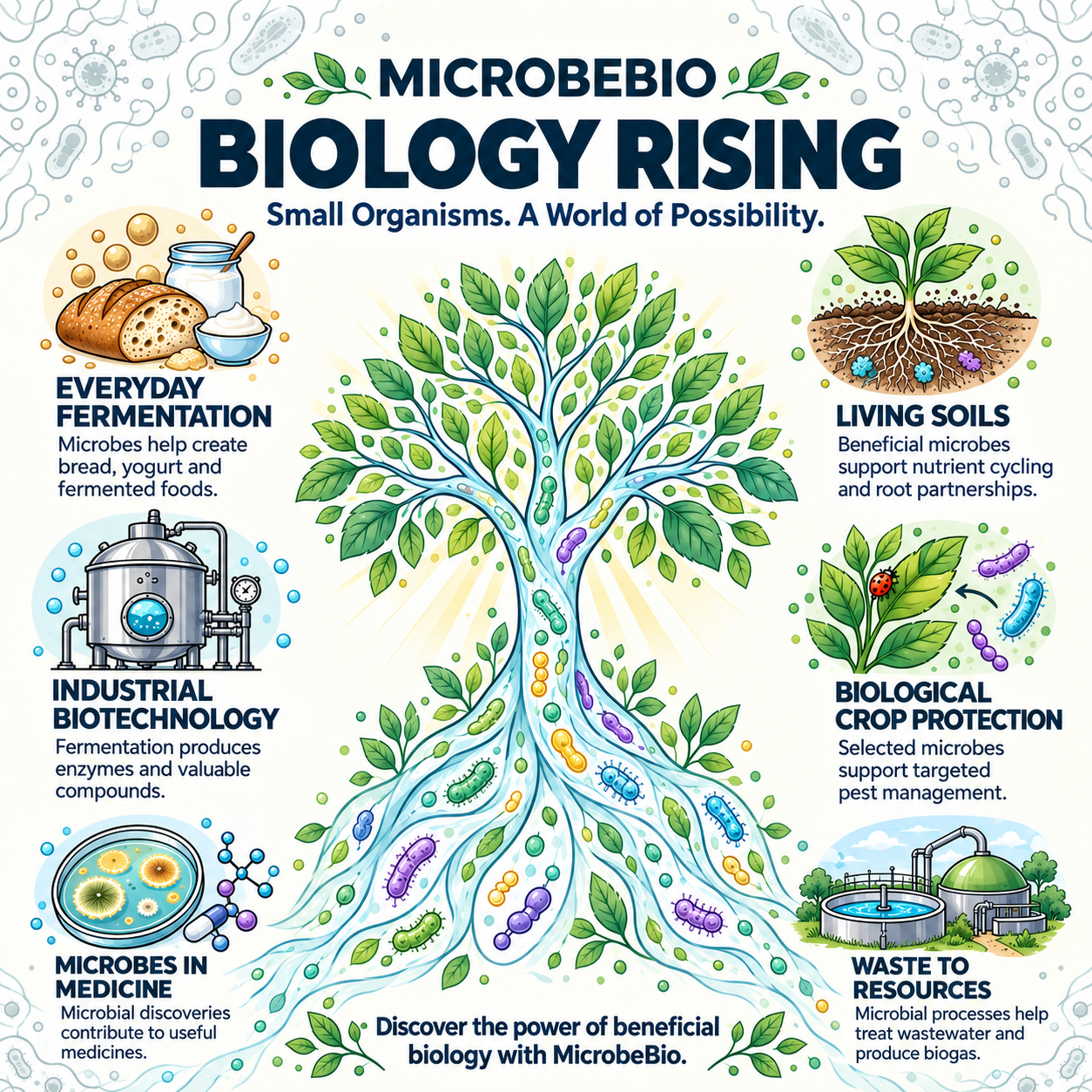
From the foods we enjoy to the soils that feed us, microbes help sustain our world. MicrobeBio’s Biology Rising vision brings that extraordinary potential into focus.
A loaf of bread. A thriving root system. Organic waste transformed into useful resources.
Behind each is a biological process powered by organisms too small to see.
For generations, people have harnessed microbes to produce food, manufacture valuable compounds, and treat wastewater. Today, understanding these organisms opens new opportunities for agriculture and environmental stewardship.
At MicrobeBio, Biology Rising expresses a vision: putting beneficial biology to work to support healthier soils, more efficient resource use, and productive agricultural systems.
Everyday Life Begins with Biology
Microbial biotechnology has been part of daily life for centuries.
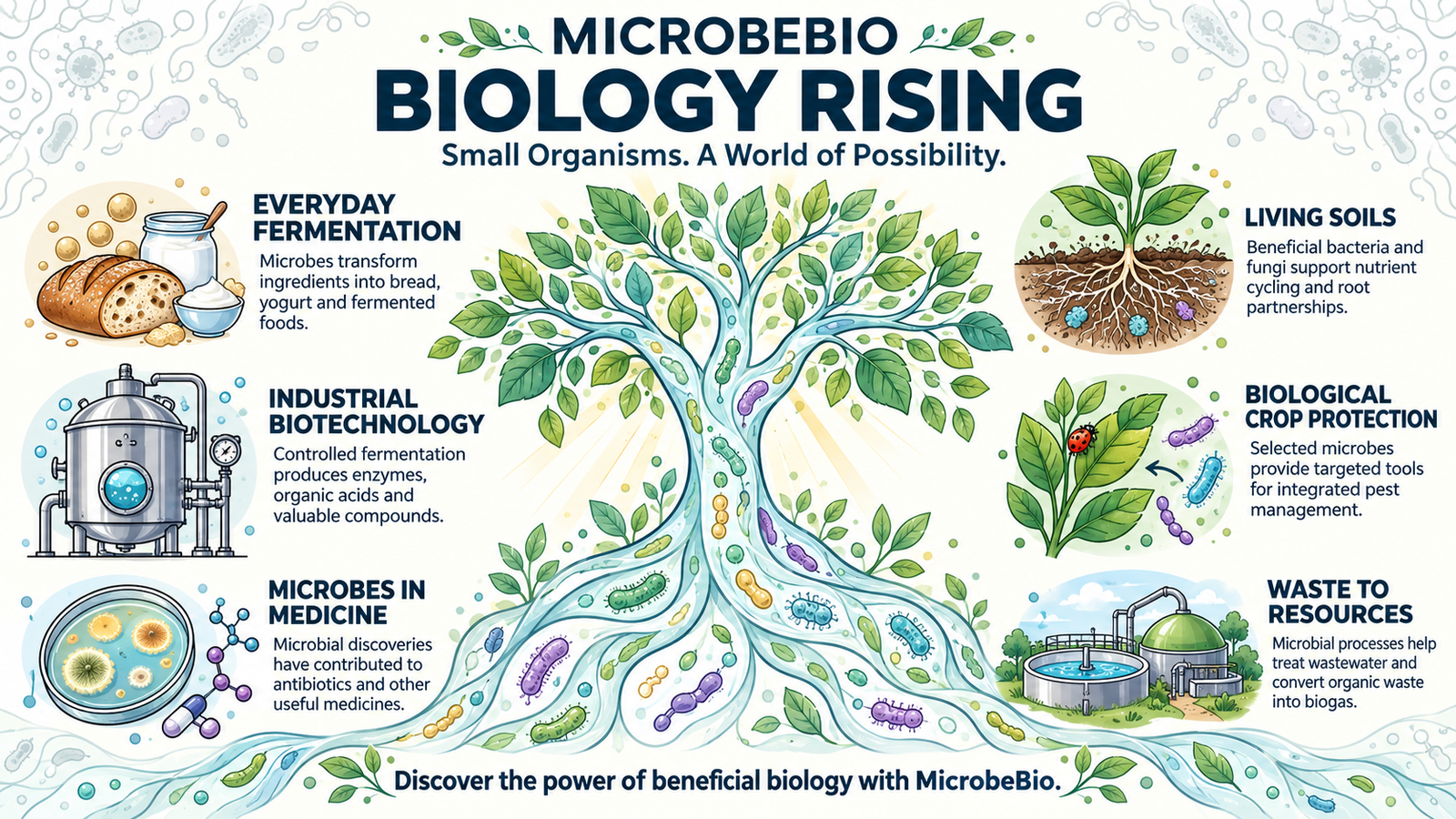
Lactic acid bacteria help turn milk into yogurt and other fermented foods. The yeast Saccharomyces cerevisiae makes bread rise and converts sugars into ethanol. In Swiss cheese, propionic acid bacteria produce the carbon dioxide that creates its characteristic holes. These familiar examples reveal a remarkable ability: microbes transform raw materials into something valuable.
Some carefully selected bacterial strains can also produce vitamins during fermentation. Vitamin B12 production, for example, is a specific capability of certain strains rather than a universal feature of lactic acid bacteria.
The opportunity begins with understanding what each organism can do—and creating the conditions that allow it to perform.
From Fermentation to Human Welfare
Industrial fermentation expands these biological capabilities through controlled production.
Microbes have helped produce antibiotics, enzymes, organic acids, and medically useful compounds. Examples include streptokinase, used in certain treatments to dissolve blood clots, and microbial production of compounds such as lovastatin, which helps lower cholesterol.
These achievements demonstrate the wider promise of biotechnology. With careful selection and process control, microbial activity can become a practical tool for solving human problems.
That same principle creates opportunities beneath our feet.
Healthy Soil Is a Living System
Soil contains a complex community of organisms that decompose organic matter, cycle nutrients, and interact with plant roots.
Beneficial partnerships can help plants access essential resources. Rhizobium bacteria form associations with compatible legumes, fixing atmospheric nitrogen. Arbuscular mycorrhizal fungi extend beyond roots through fine fungal threads, helping plants obtain nutrients, particularly phosphorus.
These relationships help explain why biology deserves a central place in soil management.
For MicrobeBio, Biology Rising means advancing an approach that considers the living root zone alongside crop nutrition, irrigation, and soil conditions. The goal is to make beneficial microbial processes a practical part of agricultural management.
Success depends on matching the right organisms with the crop, environment, and application method.
Biological Tools for Crop Protection
Microbes also contribute to managing agricultural pests.
Selected strains of Bacillus thuringiensis, commonly known as Bt, produce proteins active against particular insect groups. Their specificity illustrates how microbial tools can support targeted pest management.
Biological crop protection works best within a coordinated program that includes monitoring, appropriate application timing, and sound agronomic practices.
The promise is meaningful: more ways for growers to manage crop challenges while making informed decisions about their inputs.
Turning Waste into Opportunity
The value of microbes extends beyond the field.
In biological wastewater treatment, microbial communities break down organic material, helping reduce the oxygen demand associated with that material. Effective treatment depends on maintaining suitable operating conditions for those communities.
In anaerobic digestion, cooperating microorganisms—including methane-producing archaea—convert organic materials into biogas. Capturing that gas creates opportunities to recover energy from waste streams.
These processes support a more circular approach to resource management, where biological activity helps recover value from materials that would otherwise require disposal.
Biology Rising with MicrobeBio
The future of biotechnology rests on translating biological potential into reliable, measurable results.
MicrobeBio’s Biology Rising vision connects that ambition with the needs of growers, businesses, and communities: productive soils, responsible resource management, and practical biological innovation.
Tiny organisms offer extraordinary possibilities. Understanding their mechanisms—and applying them thoughtfully—is how those possibilities become useful solutions.
Discover MicrobeBio’s approach to beneficial biology and explore opportunities for your agricultural or environmental project.
MicrobeBio — Biology Rising. Growing Possibility.